

Caloosahatchee Connect Project completed
The most ambitious water project in the history of Cape Coral has been completed after 13 years of effort.
On a chilly Thursday morning, dignitaries from Cape Coral, Fort Myers and the South Florida Water Management District came to Horton Park in the Cape to celebrate the milestone while cutting the ribbon on the Caloosahatchee Connect Project.
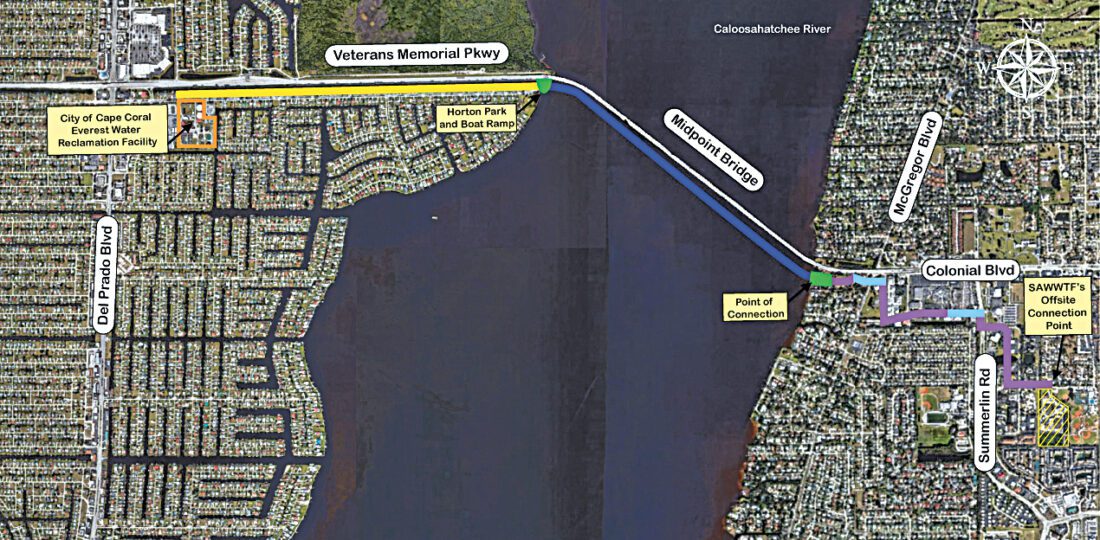
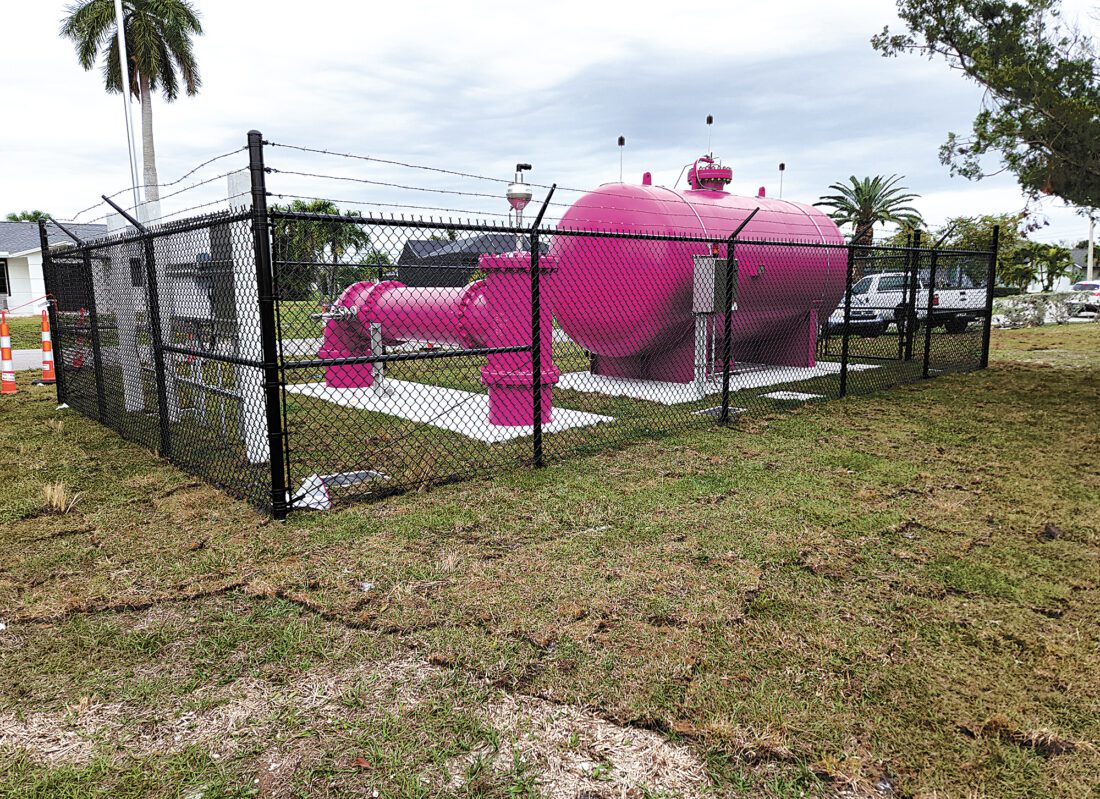
Horton Park is the connection between the underground pipeline from Fort Myers under the Caloosahatchee River and the reclaimed water transmission main from the Everest water reclamation facility.
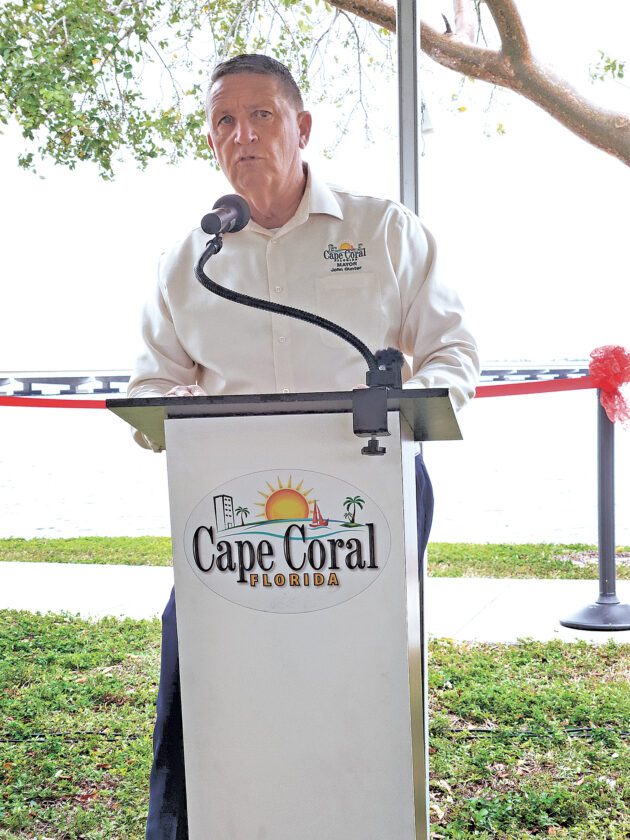
Cape Coral Mayor John Gunter said of all the projects the city has completed over the years, the Caloosahatchee Connect project is perhaps the most transformational.
“This is a project that will help both our cities many years into the future. The work of those in the past enables us to cut this ribbon today,” Gunter said. “It helps the city of Cape Coral with irrigation and maintain our freshwater canals because we won’t have to draw from that water source.”
Fort Myers Mayor Kevin Henderson echoed Gunter, saying it was important for everyone to get together and work to save the environment.
“It’s great to have this partnership with the city of Cape Coral with this project and many others,” Henderson said. “With 78 people a day moving to Lee County, we have to pull together and this is a prime example.”
Ground was broken on the Cape Coral portion of the project last March and finished about a month earlier than expected.
Cape Coral City Manager Mike Ilczyszyn said the speed of the construction was perhaps the most impressive thing.
“What the contractors were able to do without delay or degradation in the environment for one of the longest pipelines under a river is amazing,” Ilczyszyn said. “When you start these things, they’re a concept. Us and Fort Myers came together to discuss ideas that made this a real win/win for everyone.”
Jeff Pearson, Cape Coral utilities director was excited about the project and for the residents who will benefit.
“This reclaimed water saves our residents millions of dollars each year versus using drinking water to irrigate their lawn,” Pearson said. “Every year this project will pay dividends to our customers.”
The Caloosahatchee Connect Project is a large reclaimed water pipeline allowing the city of Cape Coral to transfer up to 12 million gallons of water daily from Fort Myers.
The water, which would otherwise have been discharged into the Caloosahatchee River, will provide Cape residents with an additional irrigation water source to reduce withdrawals from freshwater canals and help maintain water levels during the dry season.
The $22 million project ($12 million of it paid for by grants) will bring irrigation and fire-service water to the city via 7,630 feet of pipeline underneath the Caloosahatchee, the largest such project in the world.
The effort to make the project a reality began in 2011, as the city was growing and the need for irrigation water was becoming more acute.
Former city manager John Szerlag was instrumental in pushing the project forward until Cape Coral and Fort Myers entered into an interlocal agreement to construct the pipeline in 2018, giving the city a source for water it needs and Fort Myers a way to dispose of its treated wastewater in a way that is more environmentally friendly than discharging it into the river.
Cape Coral utilized Horizontal Directional Drilling to install pipe underneath the river while Fort Myers utilized microtunneling to install a portion of the reclaimed water main underneath busy intersections along the pipeline route.