

In memory: WWII liberator to be honored
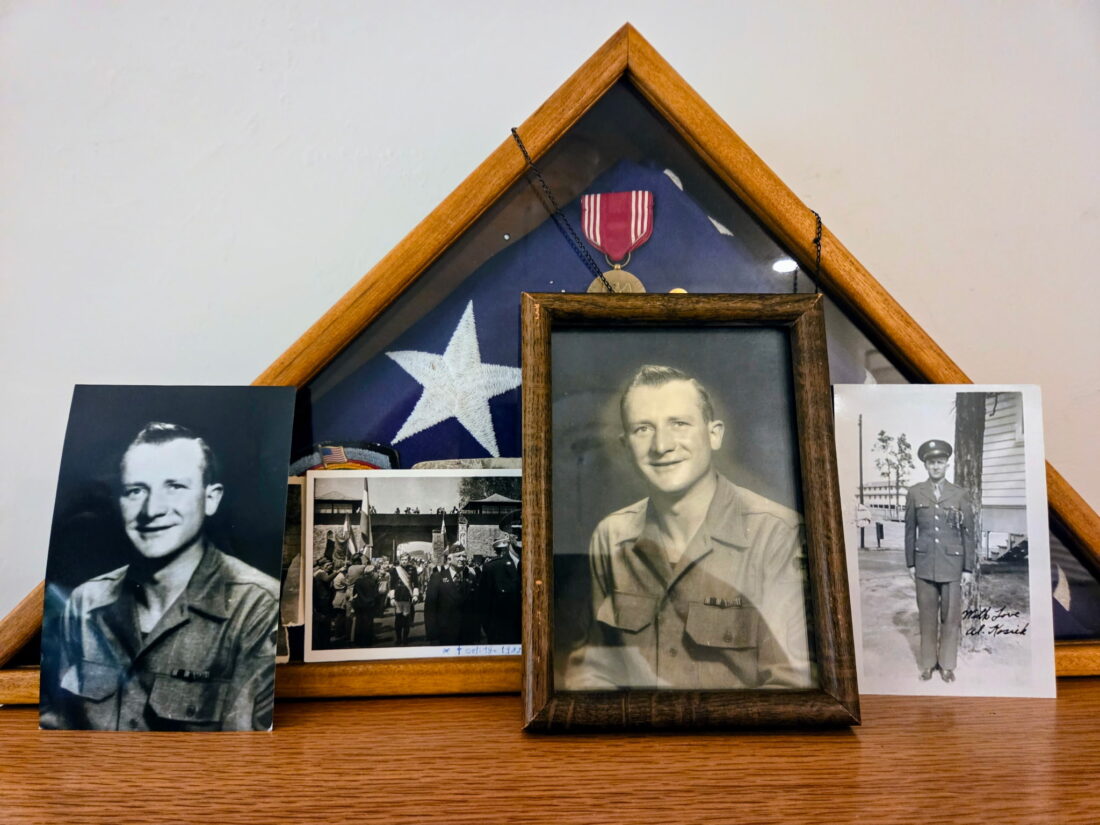
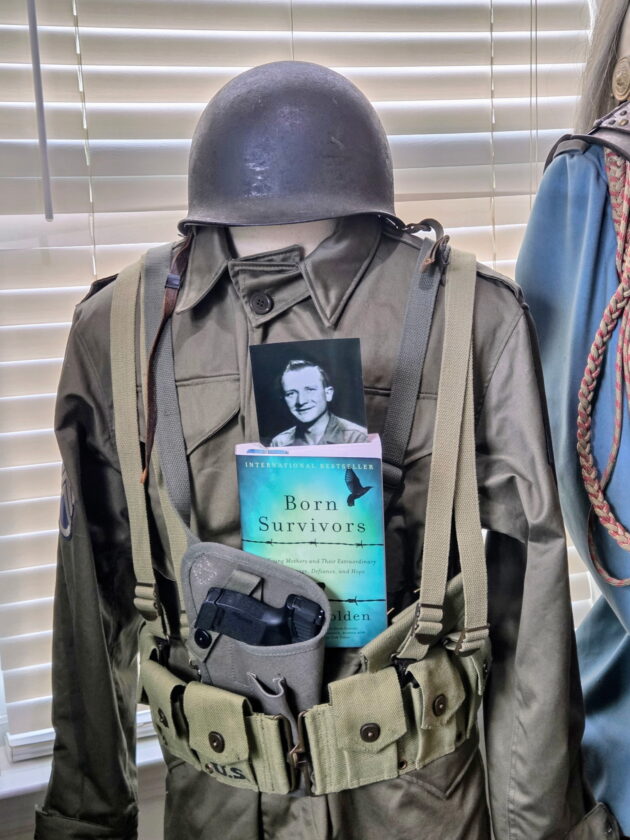
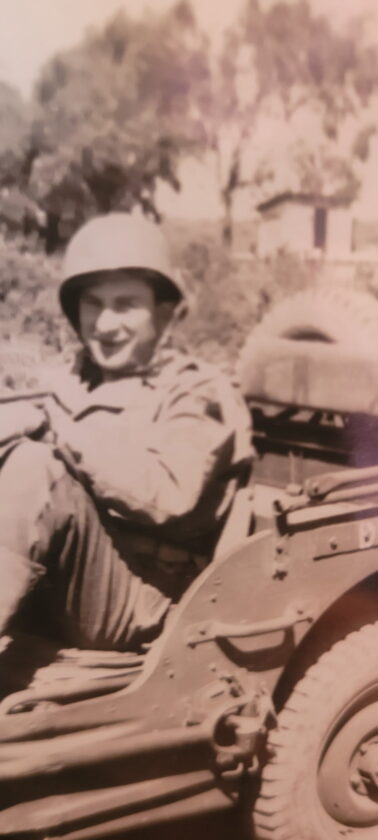
A war hero who helped free concentration camps in Austria at the tail end of World War II will be honored this weekend and early next week in Southwest Florida.
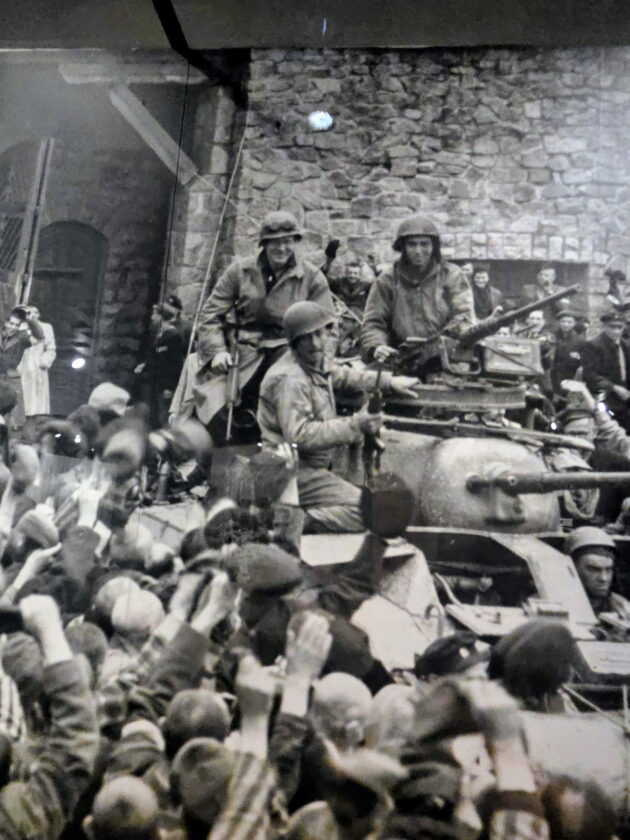
Staff Sgt. Albert J. Kosiek of the 41st Reconnaissance Squadron of the 11th Armored Division, 3rd U.S. Army, became a war hero on May 5, 1945, when he and 23 men liberated not one, but two concentration camps: Mauthausen and Gusen (I, II and III).
This Sunday in Fort Myers, Kosiek will be honored posthumously with the Mensch Award at Temple Beth-El. The award is bestowed by the Mensch International Foundation given to those who work to eliminate antisemitism while promoting freedom of speech and worship.
On Nov. 19 at the Brotherhood of Heroes Resource Center & Museum in Cape Coral, Kosiek’s son, Paul, will speak about his late father and his heroism against the Nazis.
The luncheon at the Brotherhood of Heroes will take place at noon.
What started off as a mission to check bridges in St. Georgen turned into a completely different ordeal when a Swiss Red Cross delegate, Louis Haefliger, made contact with Kosiek.
With the help of a translator, Haefliger told Kosiek there were large concentration camps in the vicinity, the locations of which were previously unknown to the U.S.
“With courage, determination, and the help of others, my father understood the urgency of the moment,” Paul said. “My father, when he was doing this, had 23 men and a tank. When he got to the camp, he realized when he saw how huge it was, that he couldn’t turn away. If he turned away, they would know he’s afraid. He couldn’t take that chance that he would be shot at by Nazis.”
Kosiek made contact with Gen. George S. Patton, telling him he had just found Mauthausen and Gusen — camps they had been looking for on maps and could not locate as they were high in the Austrian hills.
Patton told Kosiek to turn around and go back to their headquarters.
Kosiek said no.
“My dad told Patton, ‘I can’t.'”
So, Kosiek proceeded.
“He disarmed his men and had them put some of their rifles in the trees,” Paul said. “He went back to the front of the camp, the tank shows up, and my dad said, ‘You’re surrounded,’ and he hands (the Nazis) his binoculars and they see all these guns in the trees around the perimeter. The Nazi said on the radio that they were surrounded by the United States Army.”
Kosiek first liberated Gusen, and then marched Nazi soldiers to Mauthausen, where approximately 190,000 to 200,000 people were imprisoned from 1938 to 1945 across the Mauthausen system, according to the International Holocaust Remembrance Alliance.
“At the time, it was bigger than Auschwitz,” Paul said. “They said it was a labor camp, but it was a labor death camp. They lied to the United States and other countries.
“Not only did he pull people out of ovens, not only did he calm the prisoners down, but he did this all with one gunshot. That gunshot was in the kitchen because all the prisoners were starving to death and they ran in to get as much food as they could. He needed organization, so he shot a bullet in the ceiling of the kitchen to calm everyone down, and they stopped and listened.”
Kosiek and his men are credited with freeing 40,000 people that day, with prisoners ecstatic and even singing “The Star-Spangled Banner.”
Paul said his father was always a family man and exceptionally humble, that he didn’t even know of his father’s heroism until he was 16.
“He was a barber out of the war, and then he became an electrical engineer,” Paul said. “When I was 16, my parents were rounding up money for my mother to go to Austria because my dad was being honored there.”
Kosiek passed away in 1982 at the age of 64.
Paul and his wife Sandy were invited to the 80th anniversary of the liberation a few years back, where Paul played taps at the memorial.
“My dad is the Michael Jordan, the Babe Ruth of Mauthausen,” Paul said.
In Austria, there is a museum with many of Kosiek’s medals displayed.
Paul remembers when he brought the 30 or so medals to this museum to meet with the curator.
“We told him we’re here to donate my father’s medals to the museum,” Paul recalled. “(The curator) puts his clipboard down and asks, ‘Are you Albert Koziek’s son?’ I said, ‘Yeah.’ And he just hugs me. He wouldn’t let go. He was ecstatic.
“A year goes by and they invite us back to the museum to see the medals. The museum is closed, and they unlock it. We have the general, the ambassador, all of these important people, and there are my dad’s medals in a big case, and there are pictures of my wife and I donating them. It was just incredible. We all broke down in tears. They took us into another room and it’s all of my dad. I couldn’t hold myself together.”
Paul said the only two medals he feels his father is due are the Medal of Honor and Medal of Freedom — which he and others are working towards.
Paul said his father’s story should never be forgotten.
“My father could have stayed within the narrow limits of his assigned mission. Instead, he went forward with courage, determination, and to help others who understood the urgency of the moment, including the Swiss (Red) Cross Representative Louis Haefliger,” Paul said. “Their action helped bring freedom to approximately 40,000 surviving prisoners in the Mauthausen complex. Albert never saw himself as an extraordinary man. Like many veterans of his generation, he did what he believed he had to be done. Came home, raised a family, worked and lived a life, but what he did on May 5, 1945, with the men alongside him did change the lives forever for the survivors of Mauthausen and Gusen. Liberation was not merely the end of imprisonment. It was the beginning of possibility of a life again, of family, of memories, and future generations. My dad’s story reminds us that history is not only something we remember, it’s something we learned from.”
The Brotherhood of Heroes Resource Center & Museum is at 4522 Del Prado Blvd S.