

ECHO holds its 33rd annual International Agriculture Conference
160 delegates from 14 countries take part
Agriculture is not a one-size-fits-all proposition. Farmers worldwide face different problems, different climates, different types of growing conditions.
That’s why every year, delegates from around the world come together to Southwest Florida to brainstorm solutions, network and give hands-on experience in ways to create more resilient crops.
The 33rd annual ECHO International Agriculture Conference was held Nov. 10-12 at the Crowne Plaza Hotel in Fort Myers and, in the afternoon, at the ECHO farm off Bayshore Road in North Fort Myers. The theme was “Rooted Resilience” regarding soil health for the community’s well being.
Practitioners, researchers, and educators dedicated to defeating hunger and improving lives through sustainable agriculture and community development collaborated to discover practical solutions that strengthen both ecosystems and communities worldwide.
Stacy Swartz, deputy director of research and resources at ECHO, said the delegates work on behalf of the farmers.
“We are a resourcing and networking organization. We all come together to share ideas and lessons we’re learning as we work to support those farmers,” Swartz said. “This is to bring different stakeholders together, missionaries, farmers, development workers to share ideas on how to serve those we’ve been invited to serve.”
The conference brought 160 delegates from 14 countries, which is fewer than they’ve gotten in the past because of visa restrictions. The objective is still the same, to combat world hunger.
“Hunger is not new. We know there are billions of hungry people around the world and they are overlapping areas where they are experiencing more extreme weather,” Swartz said. “How do we increase internal resilience? How do we bounce back from these weather events?”
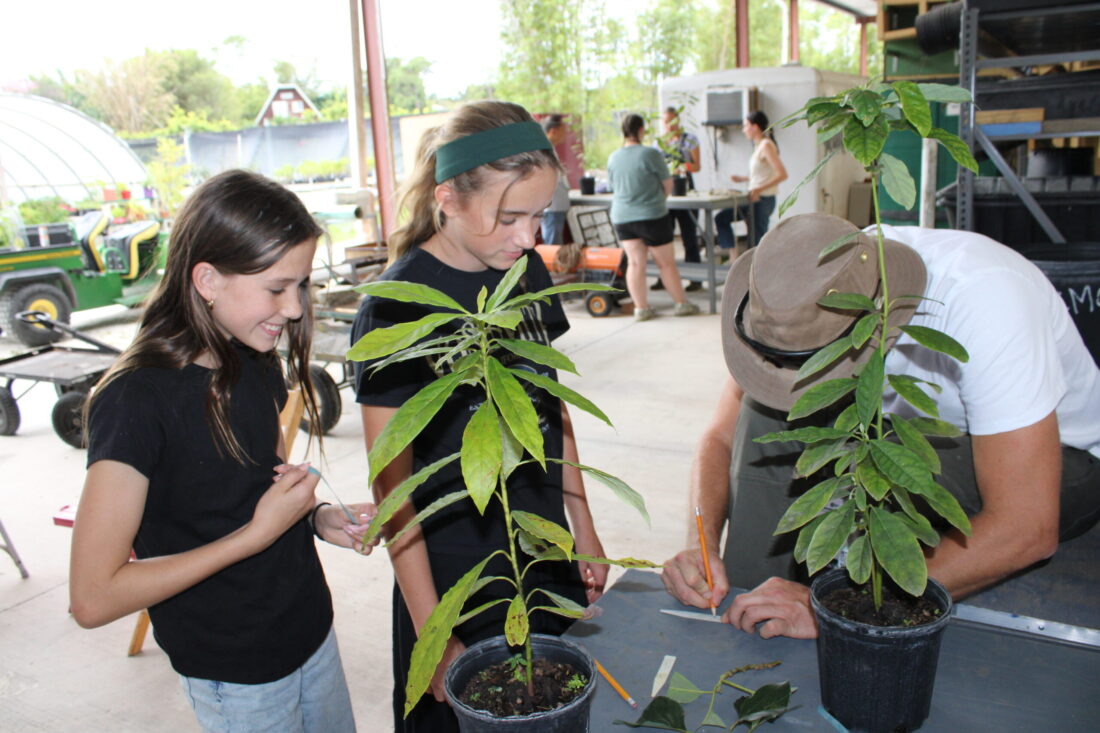
At the farm, the delegates do more than eat lunch. They learn new techniques. The delegates got hands-on practice at grafting, a signature workshop at ECHO. A piece of one plant is grafted onto another to become part of that plant, hopefully passing on some of the traits from one plant to another, possibly even disease resistance.
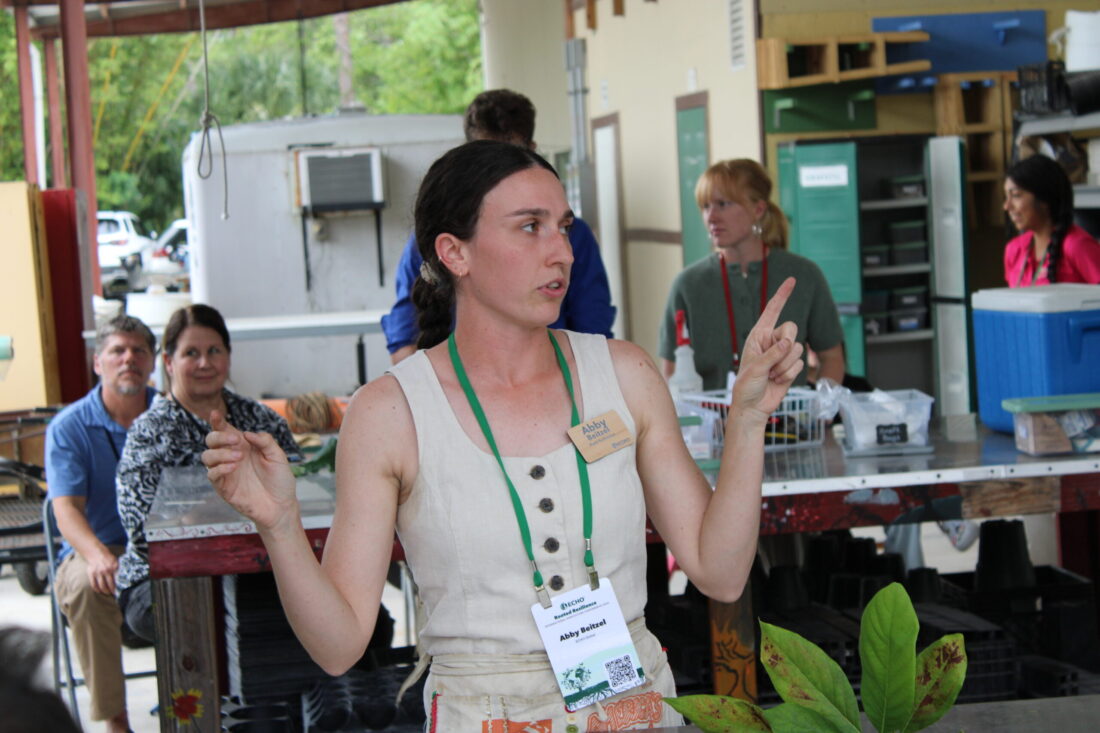
Abby Beitzel said grafting is a great way to propagate plants and take the qualities of the root stock and the grafted part to make an ideal tree.
“It helps plants grow fruit that’s predictable and produces well and gets qualities from the tree,” Beitzel said. “Grafting is a cool way to propagate plants.”
ECHO is a Christian-based organization. Ava Van Groningen and Lauren Huizenga, college students at Dortt University in Iowa, came to see how their faith can be integrated into their work.
“After high school I did mission work in the Dominican Republic for nine months. This is a good time to connect with missionaries and reflect on my own time serving,” Van Groningen said.
“One of the biggest takeaways for me is learning how to listen before you speak to understand a person deeply and connect with them on a different level,” Huizenga said.
Adelomo Bosede Sekumade, a professor at Ekiti State University in Nigeria, was impressed by the intersection between farming and faith.
“It’s been very helpful and very informative. I’ve networked with people for collaboration and research,” Sekumade said. “They are mirroring our country and it’s something I can adapt to. The practice of agriculture and religion align in a way you cannot separate them.”
Laurel Conrod, who works in Cameroon, said she and her husband are working with people who are transitioning from hunter/gatherers to farming. They came to get more knowledge and bring others over to work with them.
“We’re trying to teach simple farming techniques and bring different fruit trees and things that can help that transition,” Conrod said. “From living in the forest to living more sedentary lives in the community.”